
Third-wave coffee at home – that was our goal when we moved from the city to Hadersdorf in Vienna’s 14th district, a coffee desert. Here we share what we have learned along the way.
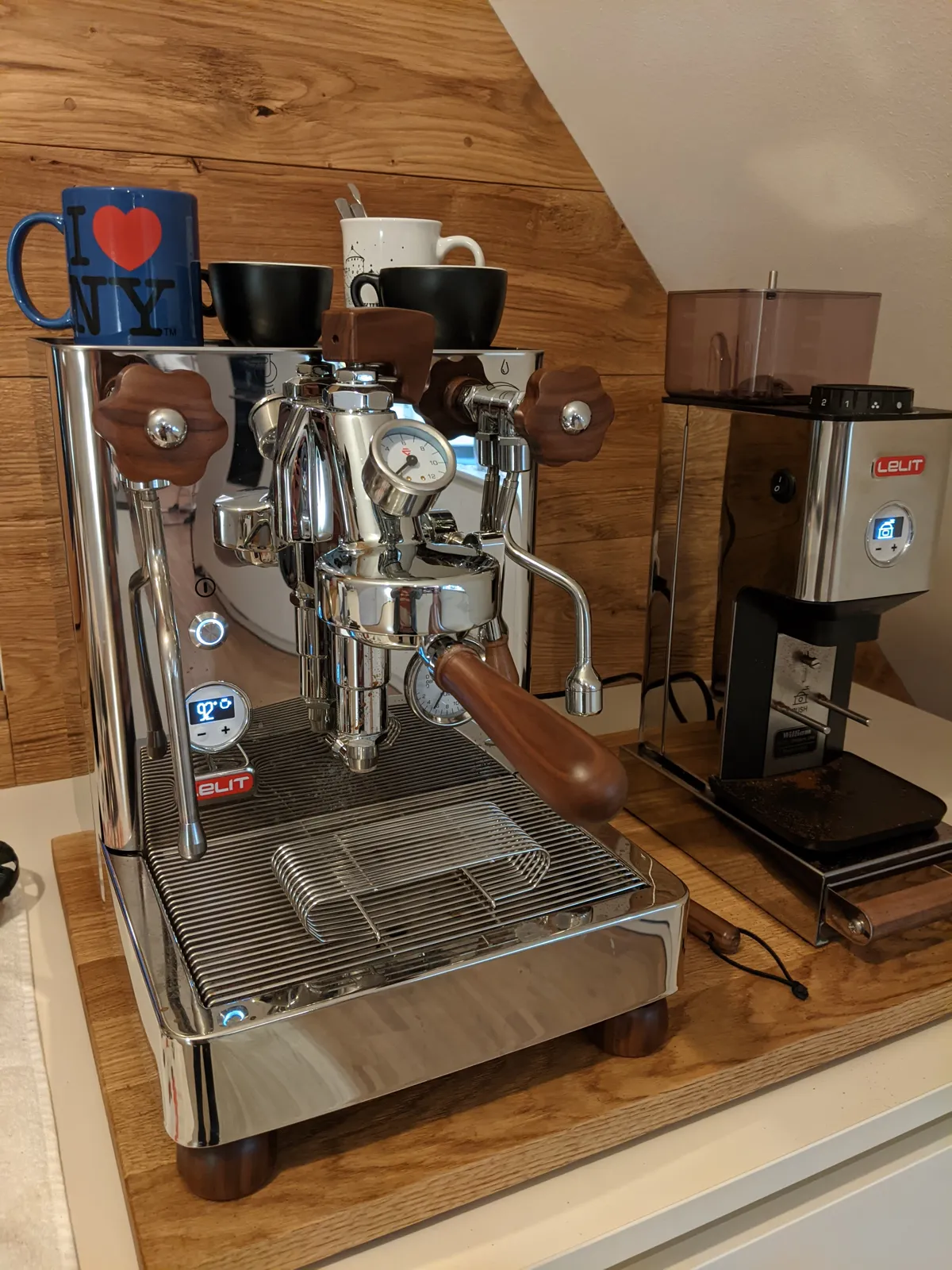
Like many people, we started with a Nespresso machine, moved on to the classic stovetop moka pot and ended up with an Italian dual-boiler espresso machine by Lelit and a matching grinder. Since then we make espresso and cappuccino at home that can hold its own against our favourite cafés – and we know what can go wrong along the way.
Our setup
Machine
Lelit Bianca PL162T
The heart of it all: a dual boiler with a rotary pump and a wooden paddle that lets you control brew pressure during the shot. Full control over every espresso – but not a push-button machine.
Main grinder
Lelit William PL72
Steel conical burrs with stepless grind adjustment. The grinder has more influence on taste than the machine – so this is not the place to save money.
Decaf grinder
Lelit William PL71
Whether it’s an espresso in the evening or friends coming over: in our house, someone asks for decaf all the time. To make that taste just as good, it has its own grinder, dialled in for the decaf beans. Otherwise you’d have to re-adjust the grind every time you switch beans – tedious, and it wastes coffee.
Beans
Suchan, Gori
For everyday espresso we grind Suchan – Bologna. For decaf we use Gori – Koffeinfrei Peru or Suchan – BIO Decaf.
Our guides
Step by step
10 steps to becoming a home barista
From choosing and storing beans to equipment, brewing technique and latte art.
Long-term review
Lelit Bianca: our experience
What we love about the Bianca, what bothers us and who it is worth over 2,000 euros for – and who not.
Buying guide
The 5 best coffee grinders for beginners
What matters with burrs, grind settings and retention – and which grinder suits which budget.
Beans from Vienna
Cafés that sell their own beans
GOTA, Balthasar, Coffee Pirates and Pelican sell beans for your machine at home – and are easy to visit with kids.
Five things we wish we had known earlier
- The grinder matters more than the machine. A good grinder with conical or flat burrs and fine adjustment makes more difference than any machine feature.
- Fresh beans make the flavour. Buy small amounts from a roaster rather than big bags at the supermarket.
- An E61 machine needs a head start. The Bianca takes 20 to 25 minutes to heat up. A timer plug saves you the morning wait.
- Cleaning is part of it. Regularly backflushing the group head isn’t complicated, but it has to be done.
- Starting small is fine. On a limited budget, an entry-level espresso machine with a good grinder beats an expensive machine with a poor grinder.
Frequently asked questions
Espresso machine or bean-to-cup?
If you just want to press a button in the morning, a bean-to-cup machine is the better choice. A portafilter machine is worth it if you want café-quality espresso, enjoy experimenting and are happy to deal with grind size, dosing and cleaning.
Do I really need a dual boiler?
Only if you make a lot of milk drinks. With two boilers you can pull a shot and steam milk at the same time without waiting for the temperature to change. If you mostly drink espresso, a simpler machine will do.
Where can I buy good beans in Vienna?
Several of the cafés we have reviewed roast or sell their own beans, including GOTA Coffee Experts, Balthasar and Coffee Pirates. You’ll find them in our guide to family-friendly cafés in Vienna.
All our articles about coffee at home are in the Home Barista section.
* Links marked with an asterisk are affiliate links: if you buy through them, we receive a small commission – the price stays the same for you. As an Amazon Associate we earn from qualifying purchases. How we fund this site